Category: Identity

  • How to Reprogram Your Brain and End Self-Sabotage Habits for Good

    How to Reprogram Your Brain and End Self-Sabotage Habits for Good

    The Neuroscience of Self-Sabotage: Why You’re Addicted to Staying the Same

    You’re not lazy. You’re not broken. You’re not unmotivated.

    But your brain? It’s addicted to familiarity. And that’s exactly why you keep falling into self-sabotage habits, even when you say you want change.

    Let’s cut through the noise. Self-sabotage habits aren’t about willpower, laziness, or not wanting it bad enough. It’s biology. It’s your nervous system doing its job, to protect you, even when it’s protecting the wrong things.

    This is the truth most personal development content won’t tell you: change is a neurological threat.

    Your brain is wired for one thing: survival. Not growth. Not goals. Just survival. When you try to do something new, start that business, set boundaries, speak on stage, your nervous system doesn’t see ambition. It sees danger. Even if the thing you’re trying to do is good for you, it’s unfamiliar. And unfamiliar equals unsafe.

    This is where self-sabotage habits sneak in: not because you’re weak, but because your brain is strong at one job, keeping you alive by keeping you the same.

    That’s why your big plans fall flat. Your habits backslide. Your motivation fades. Your subconscious is running the show, and it’s addicted to comfort.

    Why Self-Sabotage Habits Feel So Hard to Break

    Here’s the kicker: your brain craves dopamine. It wants that instant hit of reward and relief. New habits that require long-term payoff? They don’t give your brain the hit it wants.

    Scrolling your phone, eating junk, procrastinating—those behaviours do. So even if you consciously say “I want to change,” your biology’s screaming, “Let’s do what’s easy. Let’s do what we know.”

    The result? You sabotage the very routines that would build your future. Not because you hate yourself, but because your brain is prioritising short-term comfort over long-term change.

    Your current behaviours are backed by deeply grooved neural pathways—habitual brain circuits that fire automatically. Think of them like walking a familiar path through the woods. It’s easy, automatic, and feels safe.

    Trying to change your habits? That’s like carving out a brand-new trail. It takes effort. It feels awkward. It requires conscious intention. Unless you rewire those pathways, you’ll keep walking the same route. Even if it leads nowhere.

    The Emotional Cost of Staying the Same

    Here’s a brutal truth: the brain will choose known pain over unknown potential. That’s why you stay in bad relationships, toxic routines, or self-defeating thought loops. They’re familiar. And your brain equates familiar with safe—even if it hurts.

    This is why self-sabotage habits can feel so emotional. It’s not just a thought pattern—it’s a nervous system reaction. You’re not failing because you lack desire. You’re stuck because your body doesn’t feel safe to change.

    Staying the same might feel easier, but it’s costing you your confidence, clarity, and potential. Every time you betray your future self to stay comfortable, your self-trust erodes. Your identity starts to shrink to fit your fear.

    And deep down, you feel it—the resentment, the regret, the quiet ache of “I’m meant for more, but I don’t know how to change.”

    This is where shame sneaks in. And shame is the glue that holds sabotage in place.

    How to Break Self-Sabotage Habits and Rewire Your Brain

    Now for the good news: your brain can change. Neuroplasticity means those old neural grooves can be reshaped. But it takes more than motivation—it takes identity work, safety, and conscious repetition. Here’s how:

    1. Create Psychological Safety

    Change doesn’t happen in chaos. Start by regulating your nervous system. Breathwork, grounding, and slow intentional routines signal to your body: “We’re safe. We can grow.” Use the Self-Sabotage Pattern Breaker Worksheet to start identifying the chaos triggers in your daily life.

    2. Use Identity Anchors

    Stop focusing on what you want to do and start focusing on who you’re becoming. Ask: “What would a high performer choose today?” Make decisions from that future self now. The Future You Blueprint can support this shift.

    3. Celebrate Micro Wins

    Every time you resist sabotage and make an aligned choice, anchor it. Celebrate it. This creates a new dopamine association with growth instead of avoidance.

    4. Interrupt Familiar Patterns

    When you feel the pull to sabotage, pause. Breathe. Ask: “What’s familiar about this? What am I trying to protect myself from?” Awareness disrupts the autopilot.

    5. Repeat to Rewire

    Rewiring isn’t sexy, it’s consistent. Repetition carves new neural paths. Don’t wait to feel ready. Choose who you are becoming and act like it daily. Use the Personal Development Plan for Lasting Growth to track your rewiring process.

    You’re Not Addicted to Failure. You’re Addicted to Familiarity.

    That’s the bottom line. You don’t sabotage because you’re broken, you sabotage because you’re programmed. But programming isn’t permanent.

    Your identity is not fixed. Your habits aren’t destiny. Your future isn’t out of reach. You just have to make safety your foundation and build from there.

    Because success isn’t just about effort. It’s about alignment. It’s about becoming the person who can hold what they desire.

    If this resonated, it’s because the best version of yourself is already calling you forward, and you’re ready to answer. Identity isn’t found. It’s built by those willing to stop waiting and start leading.

    Before you go, make sure you head over to my blog page and check out the Free Downloads section. You’ll find powerful, no-cost resources designed to kick-start your Future You Identity transformation, including the Future You Blueprint and the Self-Sabotage Pattern Breaker for lasting growth, and so much more.

    Follow me on Instagram and TikTok if you’re ready to rewire your identity for power, success, and self-trust, because surface-level growth won’t cut it anymore.
  • You Don’t Find Yourself, You Build Yourself. Here’s How To Start.

    You Don’t Find Yourself, You Build Yourself. Here’s How To Start.

    The Myth of “Finding Yourself” (and Why It Keeps You Powerless)

    Everyone talks about “finding themselves” like it’s some magical moment that falls out of the sky. But what if I told you the truth? The best version of yourself isn’t hiding somewhere, you have to build it.

    For years, personal development culture has sold the idea that the real you is buried inside, just waiting to be found. It sounds poetic. Yet it’s a trap. Instead of building momentum, you stay stuck searching. Instead of taking action, you hesitate.

    The harsh truth? You are not a lost cause. You are a blank canvas. The best version of yourself is not lost, it’s waiting to be created. Therefore, chasing yourself keeps you powerless. Choosing to build yourself gives you control. Identity Is a Decision, Not a Discovery

    Your identity isn’t something you stumble across. It’s something you decide, every single day. Thus, if you want different results, you must build a different foundation internally before anything external can change.

    You don’t find confidence. You build it. You don’t find leadership. You practise it. The best version of yourself will not appear just because you’re patient. It will appear because you made different choices.

    How to Start Building the Best Version of Yourself

    Let’s cut the fluff. Here’s how you actually start constructing the identity that matches your ambitions.

    1. Define the Best Version of Yourself (with Ruthless Specificity)

    Vague identities create vague results. You must define the best version of yourself like your life depends on it — because it does. Ask yourself:

    • How does my future self think when faced with fear?

    • How does my future self act when no one is watching?

    • What emotional standards does my future self live by?

    Be brutal in your honesty. Moreover, make sure you describe behaviours, not just dreams. Because clarity creates speed.

    2. Break Your Emotional Addiction to Old Patterns

    Old versions of you feel safe because your brain rewards familiarity. It’s chemical, not logical. Every time you repeat a habit that keeps you small, you get a hit of emotional comfort. That’s why change feels so wrong at first, not because it’s bad, but because your nervous system craves what it knows.

    Therefore, building the best version of yourself will feel like withdrawal. Expect discomfort. Welcome it. Discomfort is not a sign you’re doing it wrong. It’s proof that you’re stepping out of the cage you outgrew a long time ago.

    3. Commit Before You Feel Ready

    Waiting to feel “ready” is one of the biggest scams you’ll ever sell yourself. You don’t build the best version of yourself by waiting. You build it by committing. You commit through action, through repetition, and through brutal honesty when you fail. If you keep waiting for certainty, you’ll die still waiting.

    Most people think commitment follows confidence. In truth, it’s the other way around. Confidence is the reward for showing up scared and still choosing to act.

    4. Master the Power of Micro-Decisions

    Identity building is not about grand gestures. It’s about small, almost invisible, daily choices. Choosing to stay focused instead of scrolling. Choosing discipline instead of excuses. Choosing ownership instead of blame.

    Each micro-decision either moves you closer to the best version of yourself or pulls you further from it. There is no neutral ground. Every day, you’re either stacking evidence for your future self — or for your old self.

    5. Regulate, Rewire, and Repeat

    You cannot become someone new without rewiring your emotional baseline. Thus, you need to:

    • Train your breath when triggered

    • Hold space for discomfort without panicking

    • Stay grounded under pressure

    Identity transformation is biological before it’s behavioural. When you regulate your body, you can rewire your mind. When you master both, you become unstoppable. Emotional resilience isn’t a nice-to-have if you’re serious about building the best version of yourself — it’s non-negotiable.

    What Stops Most People from Building the Best Version of Themselves?

    Let’s get real about why most people stay stuck. First, they believe clarity will come before commitment. It won’t. You gain clarity through action, not before it. Second, they wait for external validation, hoping someone else’s approval will give them permission to step up. It’s irrelevant.

    Moreover, they refuse to let their old environment go. Sometimes you outgrow places and people before you outgrow problems. And finally, they expect it to feel good immediately. It won’t, and that’s your signal to keep going, not your excuse to quit.

    Building the best version of yourself requires brutal standards, not blind hope. If you can accept that, you can accelerate your transformation far beyond what most people even think is possible.

    You are not an ancient artefact to be discovered. You are a future masterpiece under construction. The longer you wait to “find yourself,” the longer you rob the world of your potential. Identity isn’t found. It’s built by those willing to stop waiting and start leading. 

    Before you go, make sure you head over to my blog page and check out the Free Downloads section. You’ll find powerful, no-cost resources designed to kick-start your Future You Identity transformation, including the Future You Blueprint and the Self-Sabotage Pattern Breaker for lasting growth, and so much more.

  • How Identity Shapes Behaviour and Controls Every Decision You Make

    How Identity Shapes Behaviour and Controls Every Decision You Make

    Behaviour Isn’t Random: How Identity Shapes Behaviour and Every Decision You Make

    When most people talk about “changing their behaviour,” they treat it like a surface-level fix. They assume if they set better goals, hack their habits, or build more discipline, their actions will finally align. However, here’s the truth no one wants to admit: identity shapes behaviour at every level.

    You don’t act out of pure logic. You act out of who you believe you are, and until that identity shifts, your behaviours will always snap back to the same default, no matter how hard you try.

    Why Surface-Level Behaviour Change Fails

    At some point, you’ve probably tried to willpower your way into a new result. Maybe you forced yourself into a new morning routine, a healthier lifestyle, or a bold business strategy. Initially, it felt exciting. Yet within a few weeks — sometimes even days — you fell off.

    You didn’t fall off because you lacked discipline. You fell off because you were trying to act like a different person while still believing you were the same.

    This is the part most people miss: identity shapes behaviour, not ambition alone. No amount of forcing action can override the identity you haven’t upgraded. Until you see yourself differently, you will unconsciously sabotage every change that doesn’t feel like “you.”

    Thus, it’s not your habits you need to hack first. It’s your identity you need to rewire.

    Understanding How Identity Shapes Behaviour and Decision-Making

    Every decision you make runs through an invisible filter: “Does this match the kind of person I believe I am?”

    If the answer is yes, you act without friction. If the answer is no, you hesitate, self-sabotage, or find a way to quit.

    Let’s break it down even further. Your identity creates your thoughts (“I’m the kind of person who shows up” or “I always fail when it counts”). Those thoughts influence your emotions (confidence, fear, shame, pride). Your emotions dictate your behaviours (action, avoidance, sabotage, perseverance).

    Moreover, when you take an action that aligns with your identity, your brain rewards you. However, when you take an action that clashes with your identity, your brain punishes you with doubt, fear, or guilt.

    That’s why change feels hard — not because you’re broken, but because you are trying to act against a subconscious programme running 24/7. Until you consciously upgrade the programme, you unconsciously protect the old one.

    You weren’t born believing you were “bad with money” or “terrible at relationships” or “not a leader.” Those beliefs were built, slowly and quietly, through repeated experiences, feedback from authority figures, emotional imprints, and social conditioning.

    Over time, those repeated messages became the lens through which you see yourself. Eventually, that lens became your identity. Once something embeds into your identity, your nervous system defends it fiercely — even when it hurts you.

    This is why “just act differently” advice rarely works for lasting change. You’re not just fighting against bad habits. You’re fighting against deeply embedded wiring.

    Recognising this isn’t an excuse to stay stuck. It’s the key to setting yourself free.

    Behaviour Change That Lasts Starts With Identity Shifts

    If you want real, sustainable behavioural change, you must begin at the root: how identity shapes behaviour. Furthermore, you must consciously decide to build a new identity — one aligned micro-decision at a time. Here’s how to start rebuilding from the inside out:

    1. Define the Identity That Shapes New Behaviour

    You cannot outperform a blurry self-image. Therefore, specificity is crucial. Ask yourself:

    • What emotional standards define my future self?

    • How does the future me act under stress, fear, and pressure?

    • What behaviours feel automatic for the version of me I am becoming?

    Moreover, you must describe behaviours, not just goals. Because if you cannot picture it, you cannot practice it. Clarity creates confidence, and confidence fuels action.

    2. Link New Behaviours to Identity, Not Just Outcomes

    Most people chase goals without linking them to identity. They say, “I want to make six figures” or “I want to lose 20 pounds.” Yet they never ask who they must become to make that success inevitable.

    Instead, start linking behaviours to the identity you are building:

    • “I am a person who builds wealth with strategy and certainty.”

    • “I am a person who nourishes and moves my body with respect.”

    • “I am a leader who makes powerful decisions even when it’s uncomfortable.”

    Because when you build identity first, behaviour follows naturally.

    3. Reward Alignment Over Achievement

    Your brain craves reward. However, if you only reward yourself after massive achievements, you demotivate the process.

    Thus, start rewarding alignment instead. Took a small but uncomfortable action? Celebrate it. Regulated your emotions during conflict? Recognise it. Took responsibility instead of blame? Honour it.

    Because every time you reward aligned behaviour, you reinforce the new identity faster.

    4. Prepare for Emotional Resistance

    Change feels like grief because it is. You are letting go of an old self that once kept you safe, even if it kept you small.

    Therefore, expect emotional resistance. Expect fear, guilt, and doubt to surface. And reframe it instantly: these emotions are not proof you’re failing. They are proof you’re stepping out of your old identity’s grip.

    The faster you normalise discomfort, the faster you stabilise change.

    5. Stack Daily Evidence for Identity Shifts

    Every choice you make either casts a vote for the future you or the past you. Every decision matters. Thus, ask yourself daily:
    “What is one small, bold action I can take today that proves who I am becoming?”

    Over time, small actions snowball into unshakeable self-belief. As evidence stacks, your brain accepts the new identity as normal. At that point, you no longer have to force behaviour. It becomes who you are.

    Real-World Proof That Identity Shapes Behaviour

    Let’s bring this concept to life with real-world examples.

    Example 1: Entrepreneur vs. Hobbyist
    The hobbyist “hopes” clients find them. The entrepreneur knows they create value and drive demand. Thus, they act, sell, and lead differently — not because of tactics, but because of identity.

    Example 2: Fit Person vs. Serial Dieter
    The dieter chases numbers. The fit person lives by standards. Thus, healthy habits become effortless — because they are identity-anchored, not outcome-dependent.

    Example 3: True Leader vs. Approval Seeker
    The approval seeker avoids conflict. The leader chooses vision over validation. Thus, they set standards, hold boundaries, and make difficult decisions — because it’s who they are, not just what they do.

    In every example, identity shapes behaviour more than goals, skills, or strategies ever could. 

    Lead With Identity or Follow Old Behaviour

    You can spend the next year trying to “change your habits” on the surface. Or you can rebuild your identity at the core and let the right behaviours flow. Behaviour isn’t random.
    Identity shapes behaviour.

    When you master your identity, you master your future. And when you live from your future self, success stops feeling like a fight, and starts feeling like home.

    If this hit home, it’s because the best version of yourself is already within reach, and you’re ready to claim it. Identity isn’t discovered. It’s built by those who move first.

    Before you go, make sure you head over to my blog page and check out the Free Downloads section. You’ll find powerful, no-cost resources designed to kick-start your Future You Identity transformation, including the Future You Blueprint and the Self-Sabotage Pattern Breaker for lasting growth, and so much more.

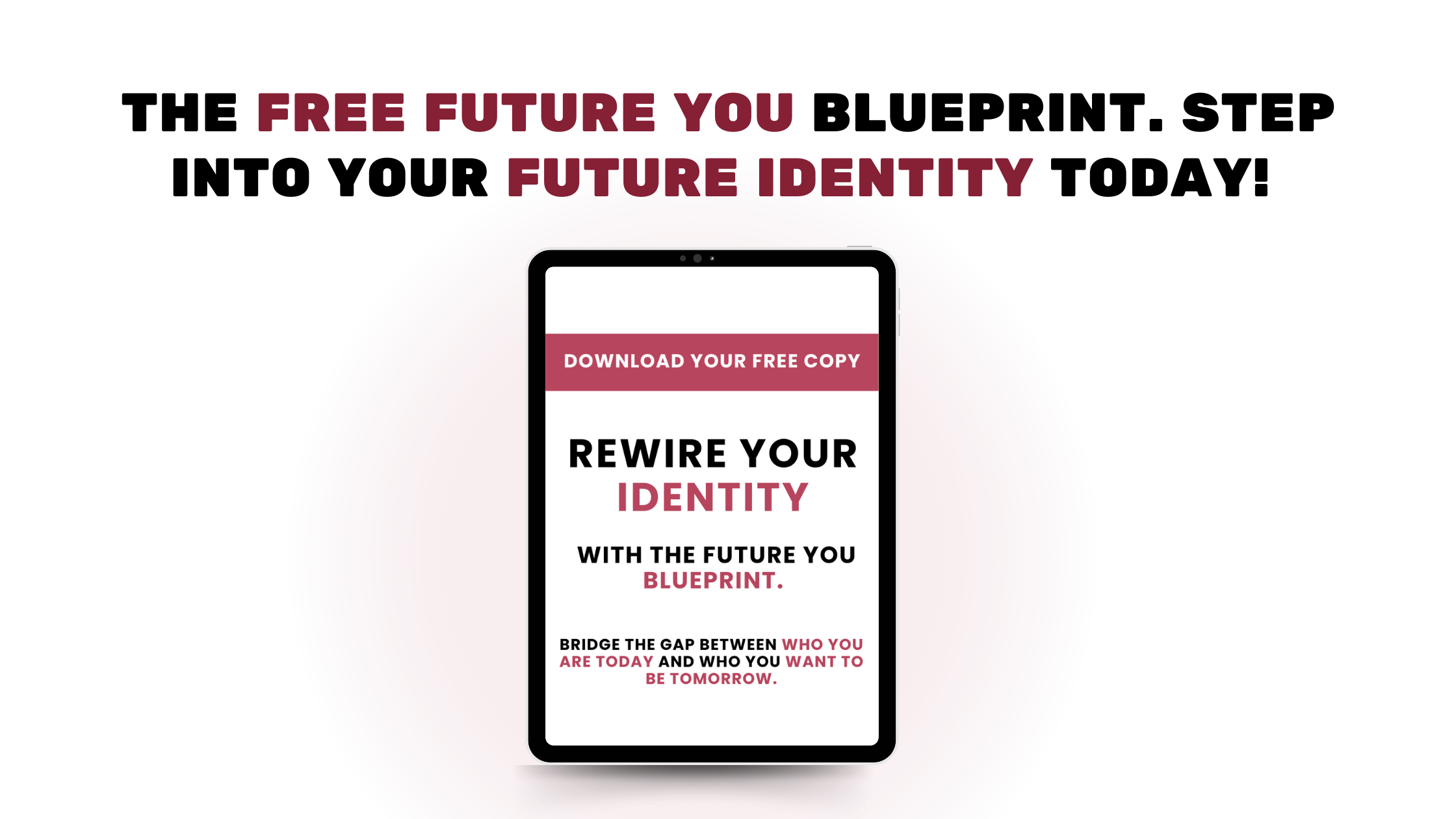
  • FREE Future You Blueprint: Rewire Your Identity Today

    FREE Future You Blueprint: Rewire Your Identity Today

    You Don’t need another “plan” you need a future you identity. Unlock yours today.

    Most people are trying to fix their life by tweaking the wrong thing: behaviour.
    But the reason you keep falling back into old loops isn’t because you’re lazy or undisciplined, it’s because you’re still operating from the same internal identity.

    Habits follow identity. Belief follows behaviour. And if your self-concept hasn’t shifted, no “routine” will stick for long. This is why “Future You” work matters. Not as a motivational exercise, but as a neurological one.

    Your brain runs on proof. Every choice you make is filtered through the identity you believe you are. So when your current self is built around self-doubt, fear, or performance mode, that’s what your decisions will reinforce, no matter how many vision boards you make.

    Rewiring your identity is the only way to build lasting change. That’s why I created the Future You Blueprint. A step-by-step process to help you:

    • Define the next-level version of you in detail

    • Expose the habits, beliefs and identity loops keeping you stuck

    • Reverse-engineer exactly how to bridge that gap, fast

    • Anchor that identity into your environment, habits, and self-trust


    This isn’t about waiting to “be ready.” It’s about showing up as if, before the world catches up. Because once you start thinking, acting, and deciding from your future self, you stop negotiating with the part of you that keeps playing small. Ready to stop fixing the old version of you and start building the next one?

    Follow me on Instagram and TikTok if you’re ready to rewire your identity for power, success, and self-trust, because surface-level growth won’t cut it anymore.

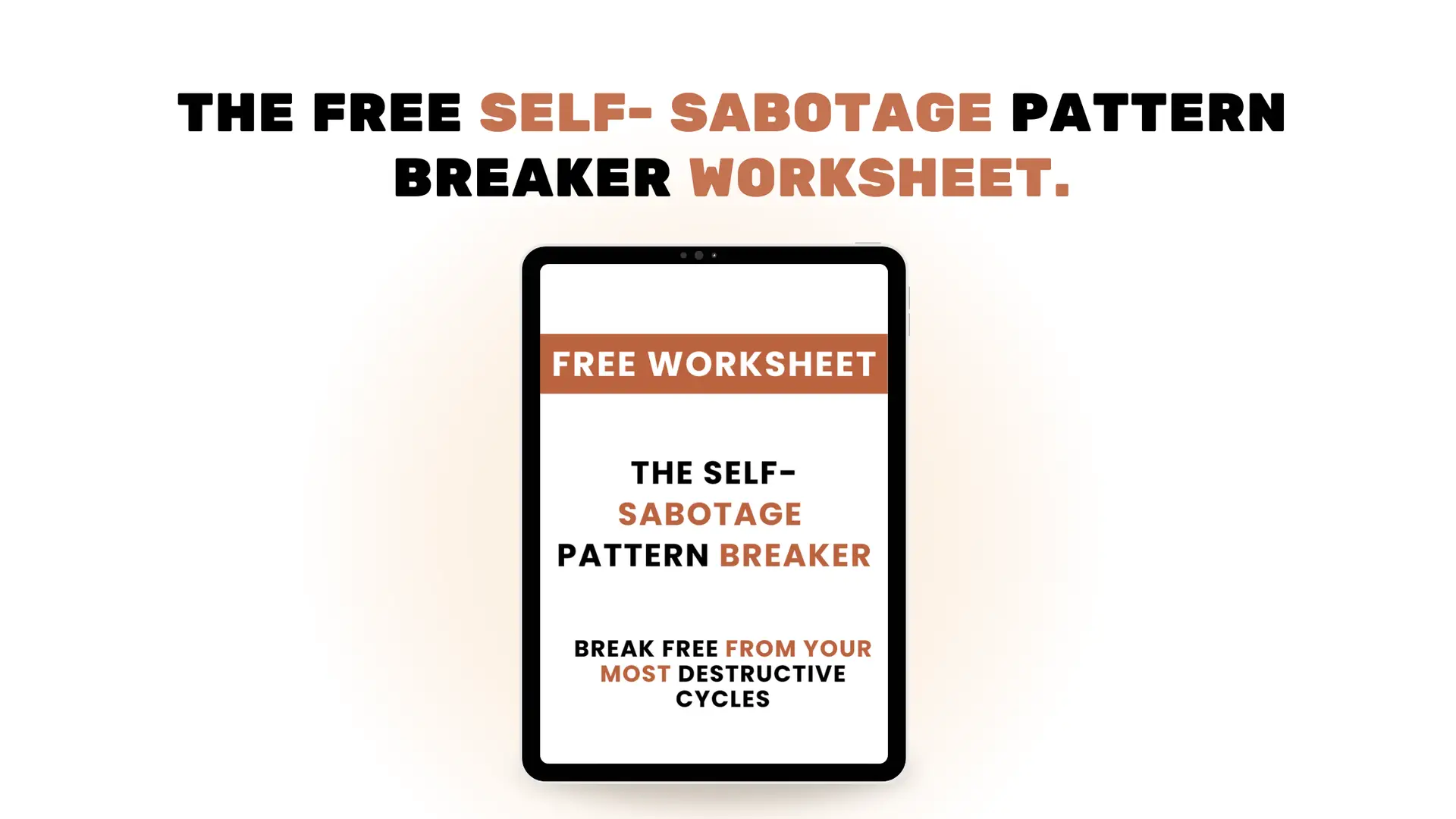
  • Free Self-Sabotage Pattern Breaker Worksheet.

    Free Self-Sabotage Pattern Breaker Worksheet.

    Why Do We Self-Sabotage?

    Have you ever felt like you’re your own worst enemy? You set a goal, make a plan, and then somehow, you find yourself doing the opposite of what you intended. Maybe you procrastinate, avoid action, or talk yourself out of opportunities. This is self-sabotage, and it’s more common than you think.

    Self-sabotage is the silent killer of dreams, relationships, and success. It’s the invisible force keeping you stuck in a cycle of frustration. You know you’re capable of more, but you don’t fully step into your power. The worst part? Most people don’t realise they’re doing it.

    Understanding the Root of Self-Sabotage

    Self-sabotage isn’t about a lack of willpower or motivation. It’s a deeply ingrained behavioral pattern often rooted in past experiences, fears, and subconscious beliefs. Your brain wants to keep you in familiar territory, even when that territory is working against you.

    Common reasons why people engage in self-sabotage include:

    • Fear of failure – Avoiding action to prevent disappointment.
    • Fear of success – Believing that success will lead to more pressure.
    • Perfectionism – Thinking that if it can’t be perfect, it shouldn’t be done at all.
    • Low self-worth – Feeling undeserving of success or happiness.
    • Past conditioning – Growing up in an environment that reinforced limiting beliefs.

    When subconscious fears drive actions, people create patterns that reinforce their limitations.

    Recognising Your Self-Sabotaging Patterns

    Before breaking free from self-sabotage, you must recognize how it appears in your life. Ask yourself:

    • Do I procrastinate on things I know are important?
    • Do I set goals but never follow through?
    • Do I push people away when things are going well?
    • Do I quit before I have a chance to succeed?
    • Do I constantly second-guess myself?

    These signs indicate that self-sabotage may be in control. The key is identifying when and where it happens most often.

    How to Break the Cycle of Self-Sabotage

    Once you’re aware of your self-sabotaging behaviors, the next step is breaking the cycle. Here’s how:

    1. Identify Your Triggers

    Self-sabotage doesn’t happen randomly. Specific emotions, situations, or fears trigger it. Take note of what happens before you fall into self-sabotaging behaviors. Do you procrastinate when feeling overwhelmed? Do you avoid opportunities when self-doubt arises? Identifying these triggers helps interrupt the cycle before it begins.

    2. Reframe Your Mindset

    Many self-sabotaging behaviors stem from negative beliefs. If you believe you’re not good enough, you’ll act in ways that confirm that belief. To break self-sabotage, shift your thinking.

    Instead of saying, “I always mess things up,” reframe it as “I’m learning and improving with each step I take.” The way you talk to yourself matters.

    3. Take Small, Consistent Actions

    Self-sabotage thrives on all-or-nothing thinking. The lie it tells you is that if something can’t be done perfectly, it shouldn’t be done at all. This keeps you stuck. The solution? Start small.

    If you struggle with procrastination, commit to five minutes of work. If you avoid risks, take one small step outside your comfort zone each day. Progress, no matter how small, breaks the cycle.

    4. Set Up Accountability

    Breaking self-sabotage isn’t just about awareness—it’s about action. One of the best ways to stay accountable is to involve others. Share your goals with a mentor, friend, or coach. Having someone check in with you keeps you on track.

    5. Create a Reset Plan

    No one is perfect, and breaking old habits takes time. There will be moments when you slip. What matters is how quickly you recover.

    Instead of falling into self-criticism, have a reset plan. When you notice self-sabotage creeping back in, pause, acknowledge it, and take action t

    The Power of Self-Awareness and Choice

    Self-sabotage thrives in the dark. The more aware you become of your patterns, the more power you have to change them. The real shift happens when you realize that you are not your past behaviors. You have the ability to choose differently.

    Breaking self-sabotage isn’t about forcing overnight change. It’s about making intentional choices, one step at a time, that align with your goals.

    If you’re ready to stop getting in your own way, I’ve created a free Self-Sabotage Pattern Breaker Worksheet to help you uncover and break your most destructive cycles. Download it now and start your journey toward lasting chan

    Want to go deeper into identity transformation and elite psychology? Follow me on Instagram (@expandwithjade) and TikTok (@lifewithjadeblack) for the strategies that actually shift who you are.

Step Into Your Next Level Identity

Sign up to my email list for Insider strategies + exclusive member discounts when you join.